Thursday, March 9, 2023

Marie Antoinette:

Kirsten Dunst in “Marie Antoinette,” directed by Sofia Coppola.
    

 Storytelling:

The youngest child of Empress Maria-Theresa of Austria, Maria Antonia, is sent by her mother to wed Louis-Auguste, the Dauphin of France, in order to forge a union between the two warring nations. Marie-Antoinette finds life at the palace of Versailles to be oppressive, as do her attempts to marry her husband. Marie-Thérèse is born, her daughter. They spend a lot of time in the Petit Trianon. She loses the support of the public as the financial crisis in France worsens; there are more riots and food shortages, and she gains the nickname "Madame Deficit" for her extravagant lifestyle and seeming indifference to the difficulties of the French people. During the French Revolution, rioting Parisians forced the royal family to depart Versailles for Paris.

Cinematography:

    You can see a wide variety of color schemes used throughout the film to fit the scenes. For instance, to complement the joyful tone of the shopping scene, there are many bright colors present, from clothing to food. Throughout the entire film, the music is a perfect complement to the scenes. The song "I want candy" was featured in the same scene with vibrant colors, and the two seamlessly blended. The camera work was yet another important aspect of the film. They frequently use close-ups and overhead shots throughout the entire film. The champagne tower and the gambling were shot close-up, which really brought out how luxurious this "shopping spree" was. The overhead shots showed the detail and were a cool way to show the food and shoes—fast and effective. 

Cultural Relevance:

    The film did a good job of fitting the time period of the movie in which the original story took place. They did this with the clothing, architecture, and mannerisms throughout the film. The film is also based on a true historical event that took place, which could be seen as more challenging, but I think the director did a great job capturing the story while also making it interesting.

Sunday, February 5, 2023

MOONLIGHT | BLUE:


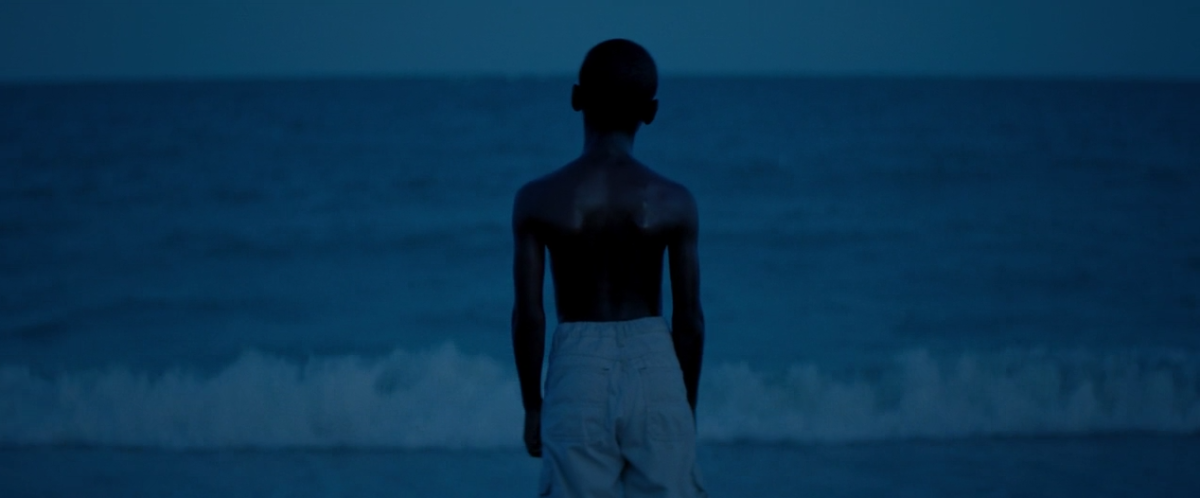
    A fantastic illustration of how directors employ composition is Moonlight. Chapter 2 stated, “One of the most important ways a filmmaker uses composition to tell their story is through repetition, a pattern of recurring images that echoes a similar framing and connects to a central idea.”The filmmakers of Moonlight do a fantastic job at this. The film's vibrantly saturated color palette is one of the most immediately noticeable optical aspects. Blue is definitely the hue that is most frequently used throughout the film.
    The blues were purposely made more intense during editing, nearly to the point of shining, by the application of a number of filters. The use of blue tones in the movie has two purposes. Naturally, the amplitude of these colors also serves to contrast the skin tones of the characters in the film. The intensity of blue imagery highlights the existence of the black characters in the movie's setting because blue is brown's complementary color. 
      
 You can observe the patterns of color throughout the entire film. The directors are ingenious in doing this since it links you to the movie's main premise without your realizing it.


The Cabinet of Dr. Caligari:

The Cabinet of Dr. Caligari poster.jpg

                         The Cabinet of Dr. Caligari Study Questions

  1. What is the essential story?

Dr. Caligari is visited by Francis and his friend Alan. The men witness Caligari showing Cesare, who has been hypnotized and who the doctor claims have the ability to predict the future. Suddenly, Cesare makes a terrifying prediction about Alan's death, and by morning, it has come true, making Cesare the main suspect.

  1. How does the film tell its story?

It tells its story through the viewpoint of a man in an insane asylum but the viewer doesn't find this out until the end.  

  1. What conventions of cinematic storytelling does it use?

The storytelling techniques used by the filmmakers included flashbacks, points of view, and a plot twist.

  1. Explain the final "plot twist." 

The plot twist was that the story was a delusion from a man in an insane asylum. This reminded me of the commonly used trope that “it was all a dream”, but it was the original.

  1. How does the final plot twist comment upon cinematic storytelling?

The final plot twist comments upon cinematic storytelling because it alters how the audience views the film.

  1. What do the set designs say about early filmmaking?

The sets in the movie had a lot of similarities to set designs you would see in a play. Something interesting that stood out is how they painted the shadows because they didn't have the special effect technology we have now. 

  1. What do the set designs imply about stories and storytelling?

The set design implies that the story and storytelling have a “goth” mood they do this by using shadows and jazz music.

  1. How do the answers to questions 6 and 7 move us to contemplate the cultural relevance of this film? 

Thinking about the set designs of the film helps us realize what time this took place. We can tell by the lack of technology that the film came before a lot of new technology. I also found that it was a German film after World War I and at this time they only allowed domestic films. So a lot of the directors focused their films on mental Health. 

  1. If you had to think about a more modern, 20th-century film with traces of Caligari, what would they be? Why?

I think Tim Burton was inspired by Caligari because his films are very gothlike. For example, the Corpse Bride, dark shadows, and Edward Scissorhands all kind of have a similar mood to Caligari.

  1. How do questions about the reliability of a narrator suggest meanings, cultural relevance, and the nature of the film?

I believe that questions about the reliability of the narrator make the audience think more about the film on a deeper level. An interesting topic that we talked about in class, is the plot twist that makes us not want to trust the narrator which is similar to how the Germans feel about trusting their government at this time.


Monday, January 23, 2023

A trip to the moon:


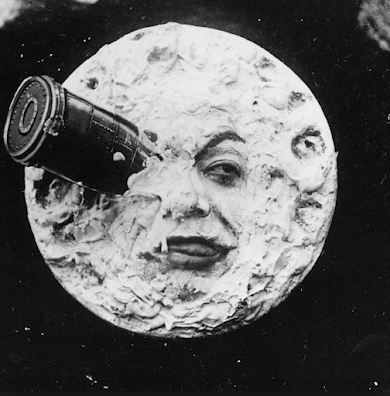
    The film that I was most interested in was A Trip to the Moon. I loved how creative the film was and the special effects involved.
    The film tells the story of a trip to the moon, which involves figuring out how to get there, building a rocket, taking off, landing, encountering aliens, and returning back to earth. This film was way ahead of its time and took a lot of creativity, especially because these things had not been done before. For example, this film came out in 1902, and the first rocket launch was in 1926, meaning that no one had ever seen a rocket launch, so everything they did they made up. This also shows when they land on the moon and meet the aliens. I enjoyed seeing how playful he made the film.
    I really enjoyed how there was a story to follow in the film as well. They also added so many comedic scenes, which I really enjoyed, like when the women all pushed the rocket with the men in it when realistically it would weigh tons or when the spaceship was shot into space like a cannon. But my overall favorite part of the film was the special effects, especially for the time it was made. The rocket landing and the explosion were so far ahead of their time, as was the camera work during the moon scene. 
    A Trip to the Moon was a trailblazer in the film industry because of the special effects and outlandish ideas and still has an effect in the film industry today. 
   

Sunday, January 15, 2023

Intro Post:


    Hello everyone! My name is Amani Jones, and I am a sophomore at North Central College. My major is currently marketing, but I've changed it three times so far, so we will see how long this lasts. I am also on the women's wrestling team at North Central, where we have over 40 girls on our team, and we just finished second at the nationals in duals this past year. I grew up in McDonough, Georgia, about 30 minutes from Atlanta. 

    In my free time, I like to try new foods, travel, and hang out with my friends and siblings. So far I have been to 9 countries and hope to add a few this year. I have two brothers who are 21 and 18, and a sister who is 2. 

    I chose to take this course because I enjoy films of all genres. I really like that watching films that can make you feel things like sadness, fear, or anger. In class, when asked the question, "What is your favorite movie?" I answered X-men First Class. This is the prequel to the X-Men series. I chose this movie because I watched it very young with my dad. It has always been a comfort movie for me and reminds me of my dad.

     I also enjoy seeing the beginning of the characters' story to help explain why the characters are the way that they are. I tend to like TV shows and movie series more because I get to understand the characters better. I also like movies where the characters have powers. I am excited to learn more about what happens behind the camera in this class and how a film comes together.


Iron Man:

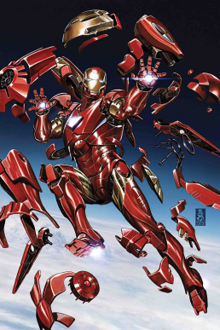
       Iron Man, directed by Jon Favreau and released in 2008, successfully combines cinematic storytelling, cultural relevance, and brillia...